

 See My Latest Article on HelloNation
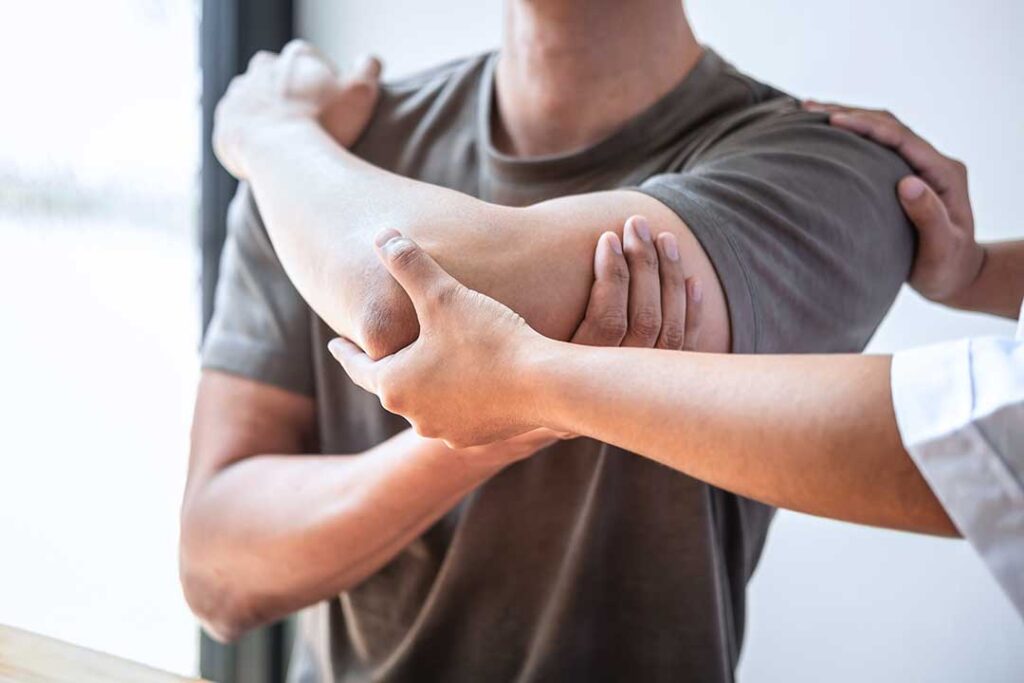
A sprain can cause pain, bruising, stiffness, and swelling around a joint. Swelling is part of the body’s early response to damaged ligaments, but too much activity, heat, or pressure can make it worse. For a mild sprain, the first several days should focus on protecting the area, controlling swelling, and gradually restoring comfortable movement.
What should you do in the first 48 to 72 hours?
The most useful early approach is often summarized as PRICE: protection, relative rest, ice, compression, and elevation. These steps are intended to limit additional irritation while the injured tissue begins to heal. ([nhs.uk](https://www.nhs.uk/conditions/sprains-and-strains/?src=conditionswidget&utm_source=openai))
Protect the injured area
Stop the activity that caused the injury and avoid movements that sharply increase pain. Depending on the location and severity of the sprain, protection may involve a supportive shoe, brace, sling, or temporary use of crutches.
Protection does not always mean keeping the joint completely still. Once pain allows, gentle movement can help reduce stiffness. The goal is to avoid re-injury without creating unnecessary immobility.
Use cold carefully
A cold pack may reduce pain and help control swelling during the first couple of days. Place a thin towel between the cold source and the skin, and apply it for about 10 to 20 minutes at a time. It can generally be repeated every few hours while awake. Never place ice directly against the skin or leave it on while sleeping. ([nhs.uk](https://www.nhs.uk/conditions/sprains-and-strains/?src=conditionswidget&utm_source=openai))
People with reduced sensation, circulation problems, or conditions such as Raynaud’s syndrome should ask a healthcare professional before using cold therapy. Reduced sensation can make it harder to notice a cold injury.
Apply compression without cutting off circulation
A properly fitted elastic wrap may limit swelling and provide light support. It should feel snug, not tight. Loosen or remove the wrap if the fingers or toes become numb, tingly, unusually cold, pale, blue, or more painful.
Compression should not be used as a way to force the joint into a particular position. It is meant to provide gentle support, not immobilize the area unless a healthcare professional has recommended a specific brace or splint.
Elevate above the level of the heart
For an ankle or foot sprain, rest the leg on pillows so the injured area is higher than the heart when practical. For a wrist or hand injury, support the arm on pillows or keep it elevated while sitting. Elevation can help fluid move away from the injured region and is most useful when combined with periods of rest. ([nhs.uk](https://www.nhs.uk/conditions/sprains-and-strains/?src=conditionswidget&utm_source=openai))
In a home with stairs, repeated trips up and down may be uncomfortable after an ankle sprain. Setting up a temporary resting area with water, medication if needed, and essentials nearby can make it easier to keep the limb elevated without unnecessary walking.
Should you use heat or massage for swelling?
Heat and vigorous massage are usually poor choices during the first two or three days after a new sprain. Heat increases blood flow and may worsen swelling, while early massage can irritate damaged tissue. Alcohol and strenuous exercise may also contribute to increased swelling or make it easier to re-injure the area. ([nhs.uk](https://www.nhs.uk/conditions/sprains-and-strains/?src=conditionswidget&utm_source=openai))
After the initial period, the appropriate use of heat or hands-on treatment depends on the injury and the person’s symptoms. Persistent swelling, recurring instability, or difficulty moving the joint may require an examination rather than additional home treatments.
When should you start moving the joint?
Begin gentle movement when pain no longer prevents it. For an ankle sprain, this might include slowly pointing the foot up and down while seated. For a wrist sprain, it may involve gentle finger movement and small, comfortable wrist motions. Stop if movement causes sharp pain, increasing swelling, or a feeling that the joint is giving way.
Gradual weight-bearing is usually preferable to immediately returning to normal activity. Put only as much weight through the injured leg as feels comfortable, and increase activity slowly. If walking becomes more painful afterward, reduce the amount of activity and allow additional recovery time. ([medlineplus.gov](https://medlineplus.gov/ency/patientinstructions/000574.htm?utm_source=openai))
Residents dealing with icy sidewalks, wet leaves, snow, or uneven outdoor surfaces should be especially cautious during recovery. A stable shoe, clear walking path, handrail, and slower pace can reduce the chance of a second fall while balance and strength are limited.
How long should swelling last?
Pain and swelling from a mild sprain often begin to improve within the first several days, although bruising and stiffness may last longer. A more serious sprain can remain swollen for several weeks, and some injuries take months to fully regain strength and stability. ([medlineplus.gov](https://www.medlineplus.gov/ency/article/000041.htm?utm_source=openai))

Swelling that fluctuates during the day is common. An ankle may look better in the morning and become puffier after standing, walking, commuting, household chores, or work. That pattern does not automatically mean the injury is worsening, but the overall trend should gradually improve.
A useful way to monitor recovery is to track:
- Whether walking or using the joint is becoming easier
- Whether the area is less tender to touch
- Whether swelling decreases after elevation
- Whether range of motion is slowly returning
- Whether the joint feels stable during ordinary activities
When might swelling indicate a more serious injury?
A sprain cannot always be distinguished from a fracture or a more significant ligament injury without an examination. Seek prompt medical evaluation if the joint looks deformed, you heard a crack or pop with immediate loss of function, or you cannot put weight on the limb or take more than a few steps. Severe pain, rapidly increasing swelling, numbness, tingling, or a blue, gray, or unusually cold body part also require urgent attention. ([nhs.uk](https://www.nhs.uk/conditions/sprains-and-strains/?src=conditionswidget&utm_source=openai))
Medical advice is also appropriate when swelling has not started to improve after two to three days, pain remains severe, or the injury is not noticeably better after several days of careful home treatment. Increasing warmth, redness, worsening pain, or fever may suggest an infection or another problem rather than a routine sprain. ([medlineplus.gov](https://www.medlineplus.gov/ency/article/000041.htm?utm_source=openai))
What helps prevent lingering swelling and weakness?
Once the acute pain and swelling settle, recovery should include a gradual return to motion, strength, balance, and normal activity. Rushing back to running, sports, yard work, or physically demanding household tasks can cause swelling to return and may increase the risk of repeated sprains.
If the joint continues to swell, gives way, remains painful, or cannot move normally, an evaluation can help determine whether there is a fracture, a more extensive ligament injury, or a need for structured rehabilitation. Physical therapy may be useful for restoring range of motion, strength, balance, and confidence after a significant sprain. ([medlineplus.gov](https://www.medlineplus.gov/ency/article/000041.htm?utm_source=openai))